
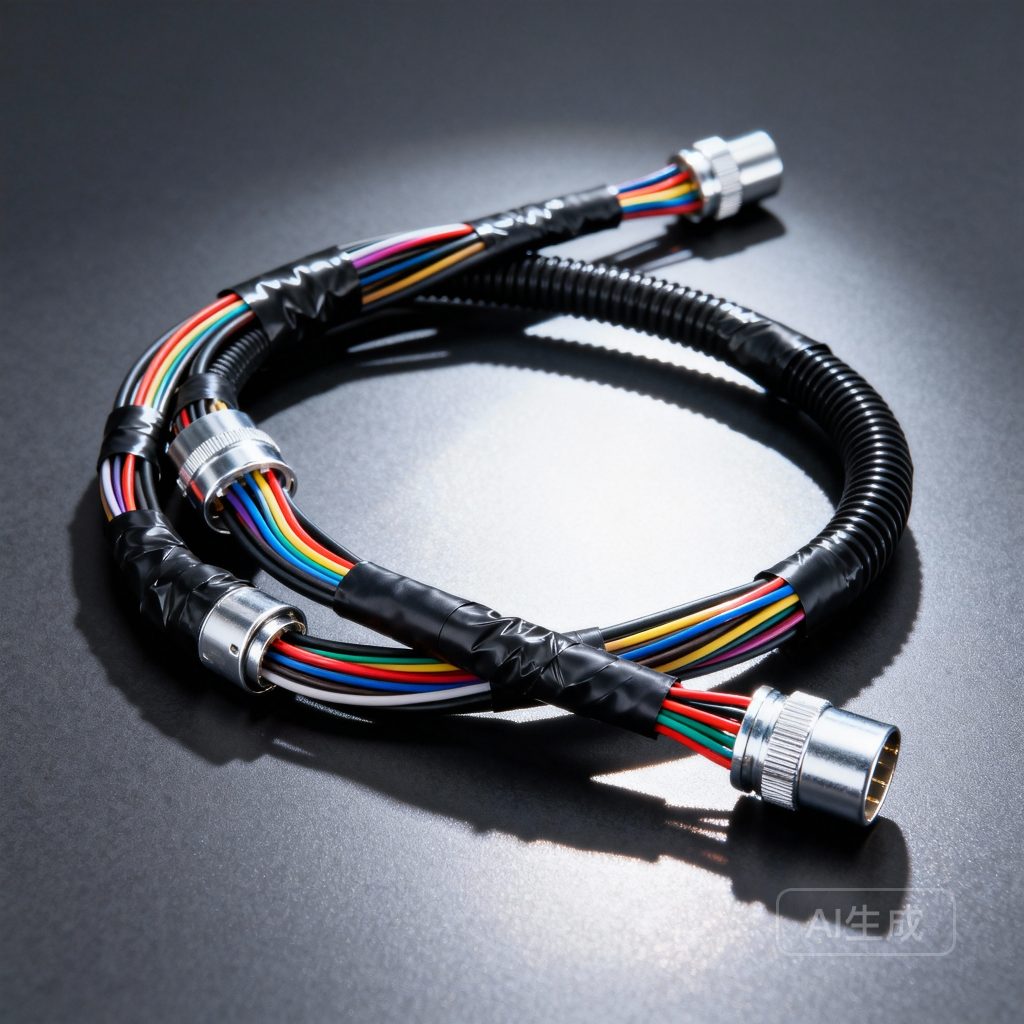
The global automotive industry is undergoing a transformative shift driven by electrification,智能化 (intelligentization), and connectivity. As core components of vehicle electrical systems, automotive harness connectors play a critical role in transmitting power, signals, and data across complex networks. Among these, 2-pin connectors like the NS20023-1.6-11 are gaining prominence due to their adaptability and versatility in modern vehicle architectures. This article explores the key trends reshaping the automotive connector landscape and how 2-pin solutions are positioned to lead innovation in 2024.
1. Electrification: The Driving Force Behind Connector Evolution
Electric vehicles (EVs) are accelerating the demand for high-performance wiring harnesses. Unlike traditional ICE vehicles, EVs require connectors that can handle higher voltage (up to 1000V DC in some cases) and current while maintaining thermal stability and insulation integrity. The automotive harness connectors industry is responding with innovations like gold-plated contacts, reinforced plastic housings, and hermetic sealing to meet EV safety standards. For 2-pin connectors like the NS20023-1.6-11, this means optimizing design for low insertion force, high vibration resistance, and compatibility with EV-specific wiring protocols.
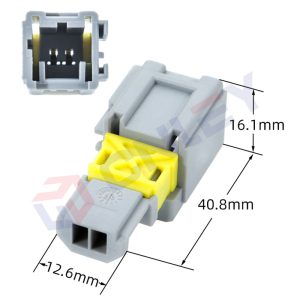
NS20023-1.6-11
2. Smart Cars and Autonomous Driving: The Connectivity Revolution
As vehicles become intelligent, the need for real-time data transmission between sensors, ECUs, and infotainment systems is skyrocketing. ADAS (Advanced Driver Assistance Systems), LiDAR, and V2X (Vehicle-to-Everything) technologies demand connectors that support high-speed Ethernet, CAN FD, and FlexRay protocols. 2-pin connectors are increasingly integrated into these systems due to their ability to transmit differential signals with minimal interference. The vehicle electrification and smart car trends are pushing manufacturers to develop compact 2-pin connectors like the NS20023-1.6-11, which balance space efficiency with robust signal integrity.
3. Lightweighting and Miniaturization: Space-Efficient Solutions
With battery packs and electronic modules shrinking in size, vehicle designers are prioritizing lightweight, compact connectors. The NS20023-1.6-11 exemplifies this trend: its 2-pin design reduces weight by 30% compared to traditional multi-pin connectors while maintaining the same current-carrying capacity. This makes it ideal for universal vehicle connectors applications where space is at a premium, such as in EV battery enclosures and compact hybrid powertrains.
4. Universal Compatibility: A Game-Changer for Aftermarket and OEMs
One of the most significant advantages of 2-pin connectors like the NS20023-1.6-11 is their universal design. Engineered for universal vehicle connectors, they can be adapted to a wide range of makes and models, reducing production complexity for OEMs and simplifying repairs for aftermarket service providers. This flexibility aligns with the industry’s push toward modular architectures, where components can be easily swapped or upgraded across vehicle lines.
Conclusion: 2-Pin Connectors as Enablers of Tomorrow’s Mobility
As the automotive industry races toward electrification and connectivity, 2-pin connectors like the NS20023-1.6-11 are proving to be more than just components—they are enablers of innovation. Their ability to meet the demands of EVs, smart cars, and universal compatibility positions them as a cornerstone of the next-generation vehicle ecosystem. For engineers and manufacturers, staying ahead of these trends means prioritizing connector design that balances performance, cost, and adaptability.