
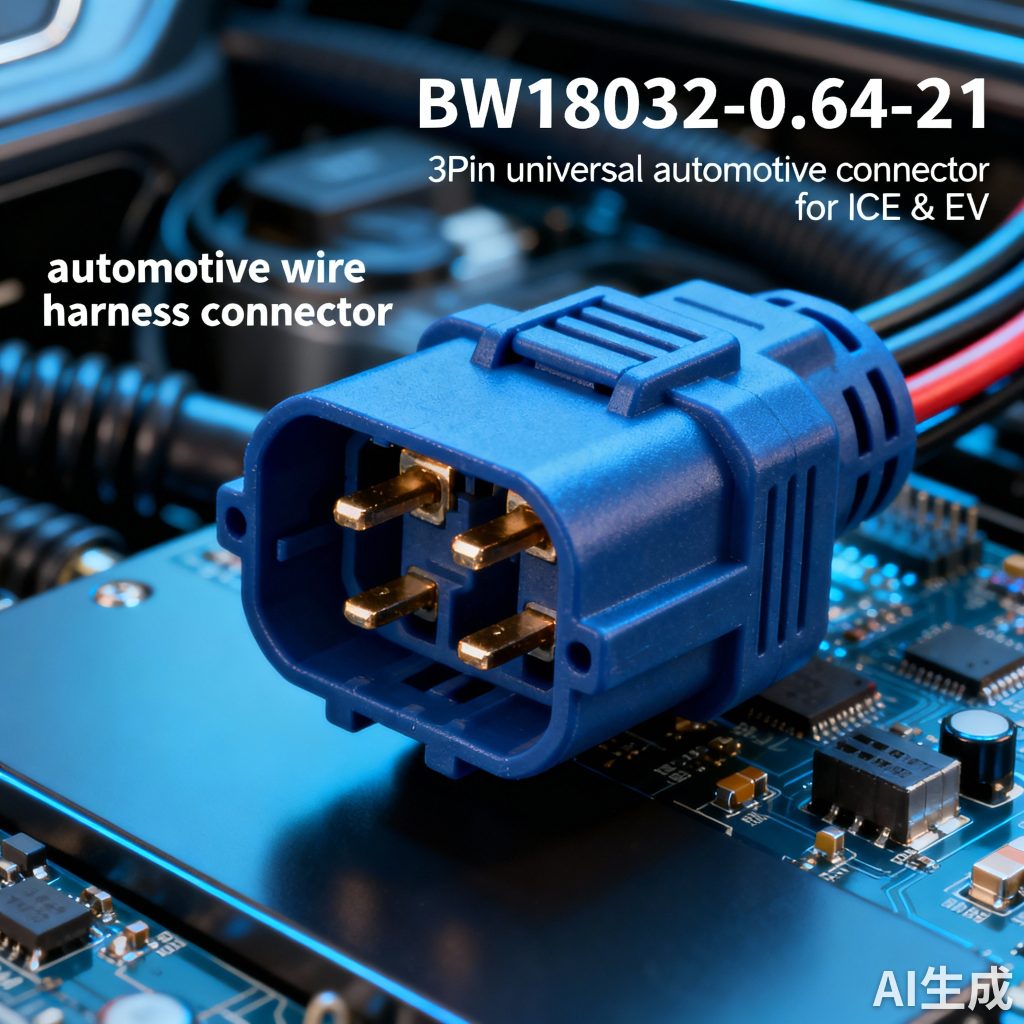
The automotive industry is undergoing a seismic shift, with electric vehicles (EVs), autonomous driving, and smart connectivity redefining how vehicles are engineered. At the heart of these innovations lies the automotive wire harness connector, a critical component ensuring reliable electrical connections. Today, we spotlight the BW18032-0.64-21 — a 3Pin universal automotive connector designed to meet modern vehicle demands, from traditional ICE models to cutting-edge EVs.
Industry Trends Driving Connector Innovation
Global EV sales are projected to grow at a CAGR of 25% through 2030 (source: IEA), and with this surge comes a need for robust, efficient wire harness technology. EVs require connectors that handle higher voltage, thermal management, and data transmission (e.g., for battery management systems). Meanwhile, connected cars demand seamless communication between sensors, infotainment, and ADAS systems — all relying on durable, high-precision connectors.
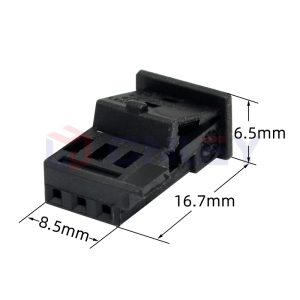
BW18032-0.64-21
Product Deep Dive: BW18032-0.64-21 3Pin Connector
The BW18032-0.64-21 is a 3Pin automotive wire harness connector engineered for universal vehicle compatibility. Its key features include:
- Universal Adaptability: Designed for universal vehicle connector applications, it fits a wide range of vehicle makes/models, reducing the need for custom harnesses in mixed fleets or aftermarket upgrades.
- 3Pin Design: The 3Pin connector configuration balances simplicity (for basic electrical tasks like lighting, sensors, or accessory power) with reliability, ensuring stable current flow and signal transmission.
- Durability & Precision: Manufactured with high-grade materials (e.g., corrosion-resistant terminals, heat-resistant housings), it withstands harsh under-hood conditions (temperature swings, vibration, moisture) — critical for long-term performance.
Applications Across Vehicle Architectures
From legacy combustion engines to next-gen EVs, the BW18032-0.64-21 excels in diverse use cases:
- Aftermarket Upgrades: Retrofit LED headlights, parking sensors, or infotainment systems with a connector that works across brands (e.g., Toyota, Ford, VW).
- EV Auxiliary Systems: Power low-voltage components (e.g., cabin lighting, HVAC) in EVs, where weight reduction and space optimization are vital — the 3Pin design minimizes harness bulk.
- Commercial Fleets: Simplify maintenance for mixed fleets (e.g., delivery vans with both ICE and EV variants) by using a single universal connector for standard electrical tasks.
Why Choose the BW18032-0.64-21?
For buyers, the decision comes down to three pillars:
- Cost-Efficiency: Universal compatibility reduces inventory complexity — one connector for multiple vehicles, lowering procurement and storage costs.
- Future-Proofing: Its design aligns with trends like vehicle electrification (handles low-voltage EV systems) and modular vehicle architectures (easy integration into new platforms).
- Reliability: Rigorous testing ensures it meets automotive-grade standards (e.g., ISO 8846 for vibration, IP67 for water/dust resistance), minimizing downtime from electrical failures.
Future Trends & The Role of Universal Connectors
As vehicles become more software-defined, the demand for standardized, modular connectors will rise. The BW18032-0.64-21’s universal design positions it as a bridge between legacy and future mobility. For example, in vehicle-to-everything (V2X) systems, even basic connectors like this 3Pin model will support low-power sensor networks, enabling safer, more connected roads.
In conclusion, the BW18032-0.64-21 3Pin automotive wire harness connector is more than a component — it’s a solution for an industry in flux. Whether you’re an auto OEM, aftermarket supplier, or fleet manager, its universal adaptability, durability, and alignment with industry trends make it a smart choice for modern vehicle electrical systems.