
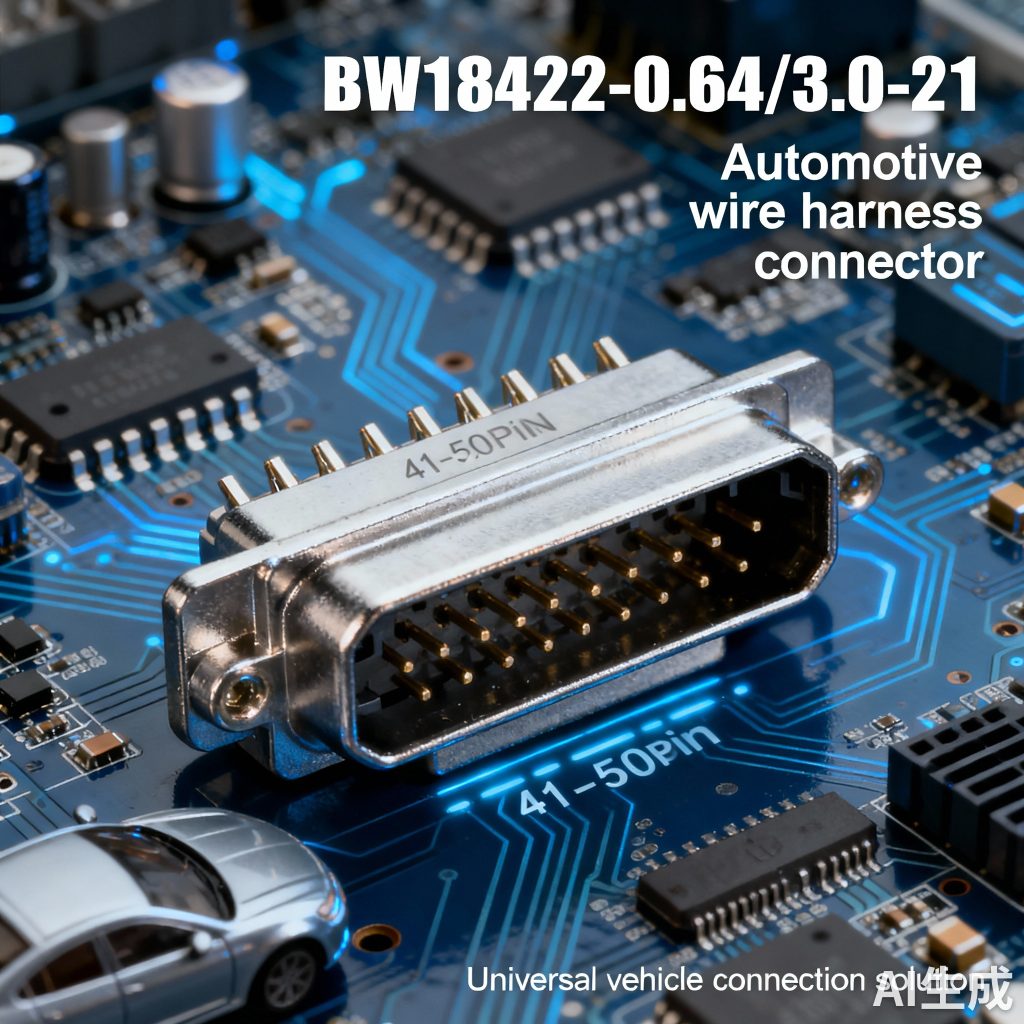
The automotive industry is undergoing a profound transformation driven by electrification, autonomous driving, and intelligent connectivity. This evolution has spurred a growing demand for reliable Automotive wire harness connector solutions that can meet the needs of both traditional and new – energy vehicles. Among the numerous products in this field, the BW18422-0.64/3.0-21 has emerged as a standout 41 – 50Pin Automotive wire harness connector designed for universal vehicle connector applications, perfectly adapting to the latest industry trends.
Product Introduction: BW18422-0.64/3.0-21
The BW18422-0.64/3.0-21 belongs to the 41 – 50Pin connector category. The “Pin” here refers to the number of electrical contacts, which determines the number of circuits that can be connected. This product is designed to be compatible with general – purpose vehicle models. Its model name “0.64/3.0” indicates the range of wire cross – sectional areas it can support, ensuring stable current and signal transmission during use.
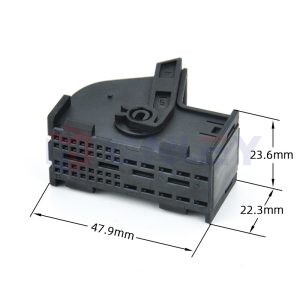
BW18422-0.64/3.0-21
Key Advantages of the Product
1. Universal Compatibility
The BW18422-0.64/3.0-21’s universal vehicle connector design is highly beneficial for automakers. It can reduce development time and costs as there is no need to develop brand – specific connectors. This makes it an ideal choice for both aftermarket upgrades and OEM projects that target multiple vehicle models.
2. Performance and Durability
Engineered to meet strict automotive industry standards, this 41-50Pin connector guarantees stable power and data transmission. Its robust structure can withstand vibrations, temperature fluctuations (usually from – 40°C to 125°C), and moisture. This is particularly crucial for electric vehicles with battery packs and high – voltage systems, as well as traditional vehicles operating in harsh environments.
3. Adaptability to the Electrification Trend
With the rapid development of electric vehicles, more complex wiring is required for batteries, motors, and charging systems. The 41 – 50Pin configuration of the BW18422-0.64/3.0-21 can support the integration of multiple circuits (such as power, communication, and safety systems) in a single connector, simplifying the design of the wire harness.
Application Scenarios and Industry Impact
In the context of the electrification trend, the BW18422-0.64/3.0-21 performs exceptionally well in the following scenarios:
- Electric Vehicles (EVs): It can be used to connect high – voltage battery management systems (BMS), electric motors, and charging interfaces. At the same time, it can maintain signal integrity for diagnostic and safety functions.
- Traditional Vehicles: When upgrading or repairing the wiring of older models, its universal compatibility can avoid the difficulties of retrofitting.
- Aftermarket Modifications: It enables car enthusiasts to add accessories (such as advanced lighting and infotainment systems) without having to rewire the entire vehicle.
Buying and Maintenance Tips
Selection Criteria
When choosing a connector, first, pay attention to the 41 – 50Pin count to ensure it matches your vehicle’s wiring requirements. Second, check the universal compatibility to confirm whether it fits your vehicle’s make and model. Also, look for quality certifications such as ISO and IATF 16949. The specifications of the BW18422-0.64/3.0-21 make it an excellent choice for universal vehicle connector needs.
Maintenance
During routine vehicle maintenance, inspect the connectors for corrosion or damage. You can clean them with dielectric grease to prevent moisture from entering. If the connector has a locking mechanism, make sure it is securely locked to avoid disconnections.
Conclusion
The BW18422-0.64/3.0-21 is a prime example of how Automotive wire harness connector design evolves with the automotive industry. Its 41 – 50Pin configuration, universal fit, and durability make it a key solution for both traditional and electric vehicles. As the electrification trend continues to gain momentum, choosing reliable and adaptable connectors like the BW18422-0.64/3.0-21 will remain crucial for automakers and DIY car enthusiasts.