
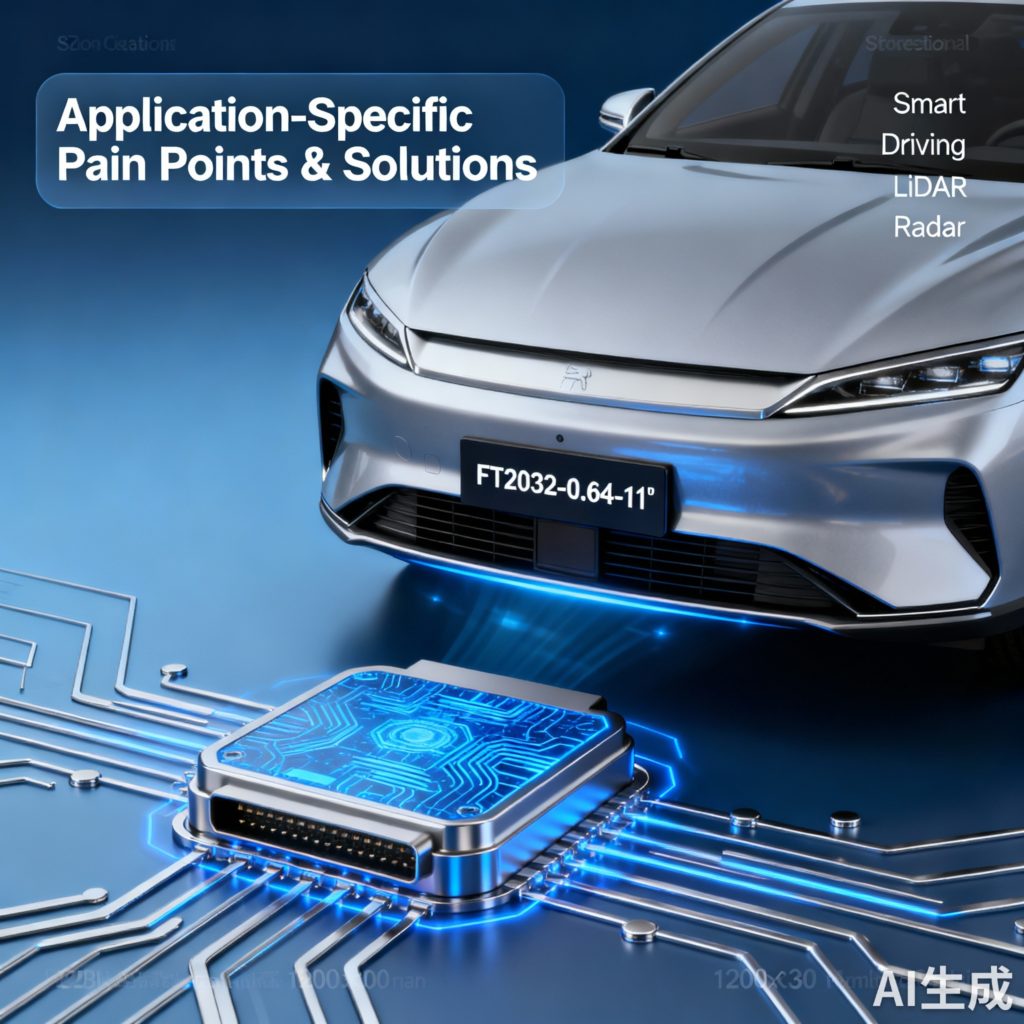
As the automotive industry accelerates toward electrification, smart driving, and connectivity, the demand for high – performance automotive harnesses has never been greater. The FT2032 – 0.64 – 11 32Pin汽车线束 emerges as a game – changer, addressing critical challenges in both smart driving and commercial vehicle applications while aligning with global market trends and compliance standards.
1. Application – Specific Pain Points & Solutions
Smart Driving: The proliferation of LiDAR, radar, and advanced driver – assistance systems (ADAS) in smart vehicles creates a complex web of sensor – to – ECU connections. High – density, reliable, and compact harnesses are essential to avoid signal interference and ensure real – time data transmission. The FT2032 – 0.64 – 11 智能驾驶线束 features a 0.64mm pitch and 32 – pin configuration, enabling dense packaging of wires for multi – sensor integration. Its shielded design (optional) mitigates EMI, a key concern in autonomous driving architectures.
Commercial Vehicles: Heavy – duty trucks, buses, and off – road vehicles operate in harsh environments with vibration, temperature fluctuations, and dust. Traditional harnesses often fail due to poor vibration resistance or incompatible connectors. The FT2032 – 0.64 – 11 商用车线束 is engineered for durability: its robust terminals and strain – relief design withstand 10,000+ insertion/extraction cycles, while the universal pinout adapts to diverse commercial vehicle platforms (e.g., Class 8 trucks, electric buses), reducing inventory complexity for fleet operators.
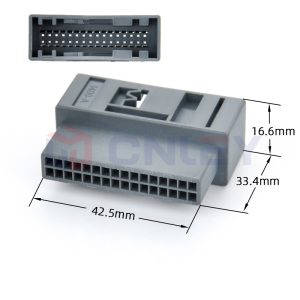
FT2032-0.64-11
2. Market Analysis: Scale, Competition, & Regional Demands
Market Size: The global automotive harness market is projected to grow at a CAGR of 5.2% from 2023 to 2028, driven by EV adoption (where harness complexity doubles vs. ICE vehicles) and ADAS penetration. The 32 – pin segment, in particular, benefits from the trend toward centralized ECUs and zonal architectures, with FT2032 – 0.64 – 11 32Pin汽车线束 positioned to capture share in this growth.
Competition: Tier 1 suppliers like Yazaki and Sumitomo dominate, but regional players (e.g., Chinese OEMs) compete on cost and customization. The FT2032 – 0.64 – 11 differentiates via its universal compatibility (across passenger and commercial vehicles) and compliance – first design, a critical factor in markets like Europe and North America.
Regional Trends: North America prioritizes ISO 26262 (functional safety) and UL 94 V – 0 (fire safety) for ADAS – enabled vehicles. Asia – Pacific, led by China and India, demands cost – effective, universal solutions for the booming EV and shared mobility sectors. The FT2032 – 0.64 – 11 通用车型线束 caters to both: its RoHS – compliant materials satisfy EU regulations, while its modular design reduces BOM costs for Asian OEMs.
3. Product Design, Sourcing, & Testing for Engineers & Buyers
Engineering Perspective: When selecting a 32 – pin harness, consider pitch (0.64mm for FT2032 – 0.64 – 11 FT2032 – 0.64 – 11 enables 40% more wires in the same space vs. 1.0mm pitch), temperature range (- 40°C to + 125°C for automotive – grade polymers), and mechanical strength (tensile load > 50N). The product’s UL – certified insulation and gold – plated contacts ensure 10+ year reliability in ADAS applications.
Purchasing Strategy: For procurement teams, universal harnesses like FT2032 – 0.64 – 11 reduce SKU counts (one part for multiple vehicle lines) and simplify compliance audits (pre – certified to IATF 16949). Volume pricing and JIT delivery options further lower total cost of ownership.
4. Compliance: Environmental & Safety Mandates
Automotive harnesses face strict regulations: RoHS restricts hazardous substances (e.g., lead – free solder in FT2032 – 0.64 – 11 32Pin汽车线束), REACH governs chemical usage, and ISO 26262 mandates ASIL – rated components for safety – critical systems. The FT2032 – 0.64 – 11’s design includes fail – safe connectors (e.g., secondary locking) to meet ASIL – B requirements, protecting OEMs from recalls and legal risks.
Conclusion
The FT2032 – 0.64 – 11 32Pin汽车线束 exemplifies how a universal, compliance – driven harness can address the dual challenges of technological innovation (smart driving) and operational resilience (commercial vehicles). As the industry evolves toward software – defined cars and electrified fleets, products that balance performance, adaptability, and regulatory compliance will lead the market. For engineers, buyers, and OEMs, the FT2032 – 0.64 – 11 is not just a component—it’s a strategic enabler of next – generation mobility.