
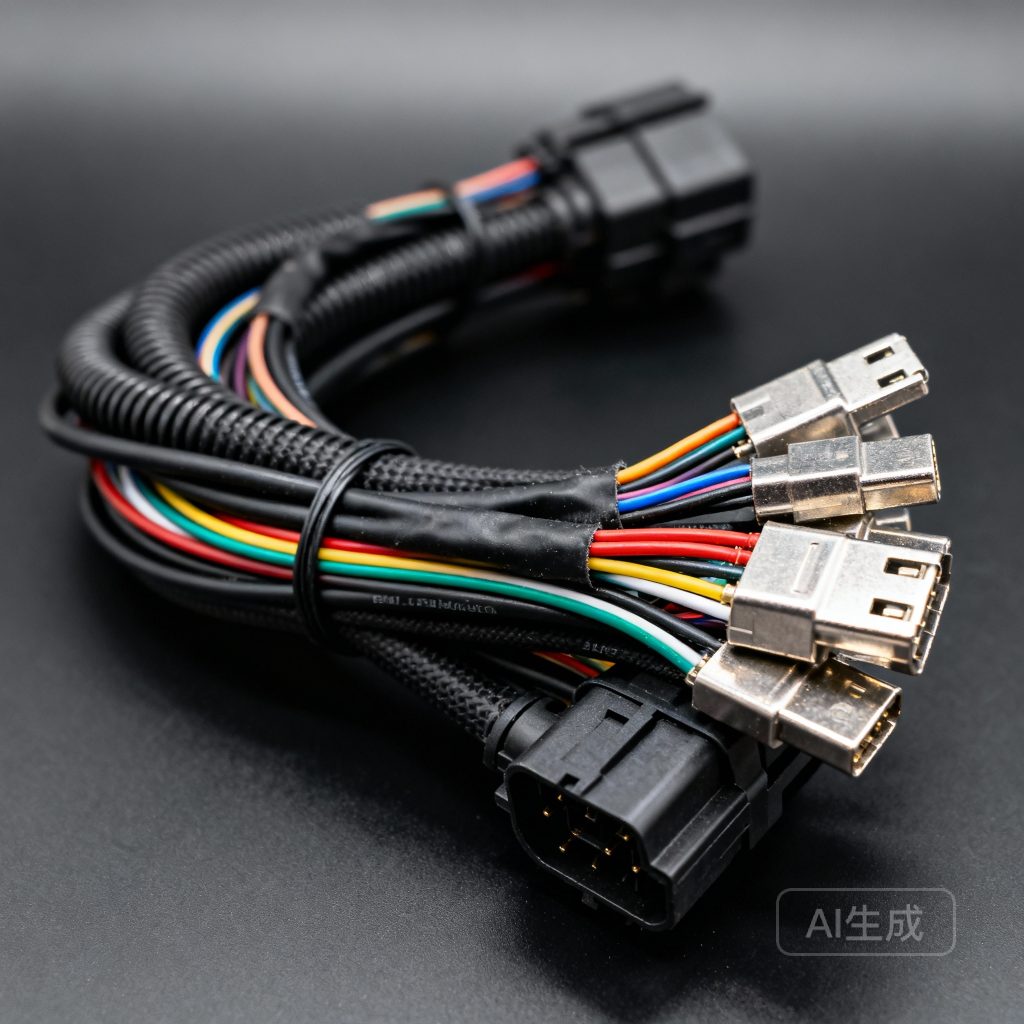
The automotive industry is undergoing rapid transformation, driven by the rise of electric vehicles (EVs), advanced driver-assistance systems (ADAS), and connected cars. At the heart of this evolution lies the critical role of automotive wiring harness connectors, which transmit electrical signals and power between vehicle components. Among these, the KL2031-1.0-21 31Pin connector stands out as a versatile solution, offering universal compatibility and robust performance for both OEMs and aftermarket applications.
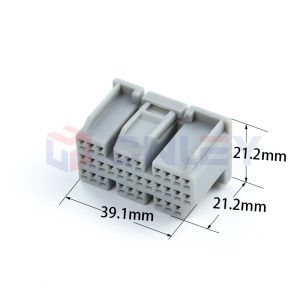
KL2031-1.0-21
1. 31Pin Design: Balancing Connectivity and Space Efficiency
The KL2031-1.0-21’s defining feature is its 31Pin configuration, a design that maximizes connectivity while maintaining compactness. This high-pin count allows for the integration of multiple vehicle functions—from infotainment systems to battery management in EVs—within a single connector. The pins are strategically arranged to minimize signal interference, ensuring reliable data transmission even in high-electromagnetic environments common in modern vehicles.
Engineers and manufacturers benefit from the 31Pin connector’s ability to consolidate wiring harnesses, reducing the need for bulky, multi-connector setups. This not only lowers production costs but also streamlines assembly processes, a critical factor in meeting tight timelines for new vehicle launches.
2. Universal Fit: A Game-Changer for Vehicle Compatibility
Designed for universal vehicle connector applications, the KL2031-1.0-21 eliminates the need for model-specific connectors. Its universal fit ensures compatibility across a wide range of makes and models, from compact sedans to heavy-duty trucks and EV platforms. This versatility is a boon for automotive suppliers, who can reduce inventory complexity by stocking a single connector variant instead of dozens of model-specific ones.
For aftermarket service providers, the KL2031-1.0-21 simplifies troubleshooting and replacement. Mechanics can quickly identify faulty connectors in salvage yards or repair shops, knowing they will work across multiple vehicle years and platforms. This reduces downtime and lowers overall maintenance costs for fleet operators and individual vehicle owners.
3. Durability and Reliability in Harsh Environments
Automotive connectors must withstand extreme conditions: temperature fluctuations, vibration, moisture, and chemical exposure. The KL2031-1.0-21 is engineered to excel here, featuring high-grade materials like thermoplastic housings and gold-plated contacts. These materials ensure:
- Corrosion Resistance: Gold plating minimizes oxidation, maintaining low contact resistance over time.
- Vibration Tolerance: A secure locking mechanism and strain relief design prevent loose connections during rough driving.
- Wide Temperature Range: The connector operates reliably from -40°C to +125°C, suitable for both indoor and outdoor vehicle environments.
Compliance with industry standards such as ISO 16949 and IATF 16949 further underscores its reliability, assuring OEMs of meeting strict quality and safety benchmarks.
4. Installation and Maintenance Efficiency
The KL2031-1.0-21 is designed for user-friendly installation. Its push-to-connect mechanism and clear pin labeling simplify mating and unmating, reducing installation time by up to 30% compared to traditional connectors. The connector’s compact size also allows for easier routing in tight engine bays or under-dash spaces, a challenge in modern vehicles with dense electrical systems.
For diagnostics, the KL2031-1.0-21 supports plug-and-play integration with automotive diagnostic tools, enabling technicians to quickly identify issues without extensive disassembly. This efficiency is particularly valuable in ADAS and EV systems, where precision and speed are critical.
5. Future-Proofing with Advanced Connector Technology
As vehicles transition to 48V electrical systems, higher data transfer rates, and autonomous capabilities, the KL2031-1.0-21’s design ensures it can adapt to evolving requirements. Its 31Pin layout provides headroom for future feature expansions, such as adding sensors for Level 4 autonomy or integrating more advanced infotainment features.
Manufacturers leveraging the KL2031-1.0-21 can future-proof their vehicle lines, reducing the need for costly connector overhauls as technology evolves. This aligns with the industry’s push for modular, scalable electrical architectures—a key trend in the next decade of automotive innovation.
Conclusion
The KL2031-1.0-21 31Pin automotive connector represents a harmonious blend of reliability, versatility, and future-proofing. For OEMs, its universal fit and high-density design streamline production and reduce component complexity. For aftermarket service providers, it simplifies repairs and lowers inventory costs. In a market increasingly focused on efficiency and adaptability, the KL2031-1.0-21 emerges as a cornerstone automotive connector advantages solution for modern vehicle ecosystems.
To explore how the KL2031-1.0-21 can elevate your vehicle’s electrical architecture, contact our team for technical specifications and compatibility guides.